.png)
![[HERO] The Hidden Leak: A 7-Point Profit Audit for Fleet Repair Shop Owners](https://cdn.prod.website-files.com/6a5128f52fb02afcbfa6d2b5/6a627b0f3f8a67f3a3f7290e_WGuzEQ0L8XX.webp)
You see the bays are full. You hear the impact wrenches humming. You see your team working from sunrise to sunset. Yet, when you look at the end-of-month financial reports, the numbers don’t reflect the sweat equity you’ve poured into the business. There is a disconnect between the volume of work and the actual profit hitting your bottom line.
In the world of fleet repair, profit doesn’t usually disappear in one giant wave. It leaks out. It’s a slow, steady drip: ten minutes of untracked labor here, a forgotten core return there, a warranty claim that was never filed because the paperwork was too buried. For small to medium fleet repair shop owners, these "invisible leaks" are the difference between scaling your business and merely surviving.
If you want to stop the bleeding, you have to find the source. This 7-point profit audit is designed to help you identify the friction points in your operation and understand how a centralized fleet management system can turn these leaks back into revenue.
Labor is your most expensive asset and your most perishable product. Once an hour passes, you can never sell it again. The first question every owner must ask is: Where is labor time actually going?
In many shops, there is a massive gap between "clocked-in time" and "billable time." If your technicians are spending 20 minutes searching for a part or 15 minutes waiting for a supervisor to sign off on a repair order, that is profit disappearing. Manual tracking often leads to "rounding down" or flat-out forgetting to log incremental tasks.
To audit this, compare your payroll hours against your invoiced labor hours for the last 30 days. If your efficiency rating is below 85%, you have a leak. You need to see, in real-time, exactly which jobs are eating your clock. Without precise tracking, you are essentially subsidizing the inefficiencies of your shop floor.
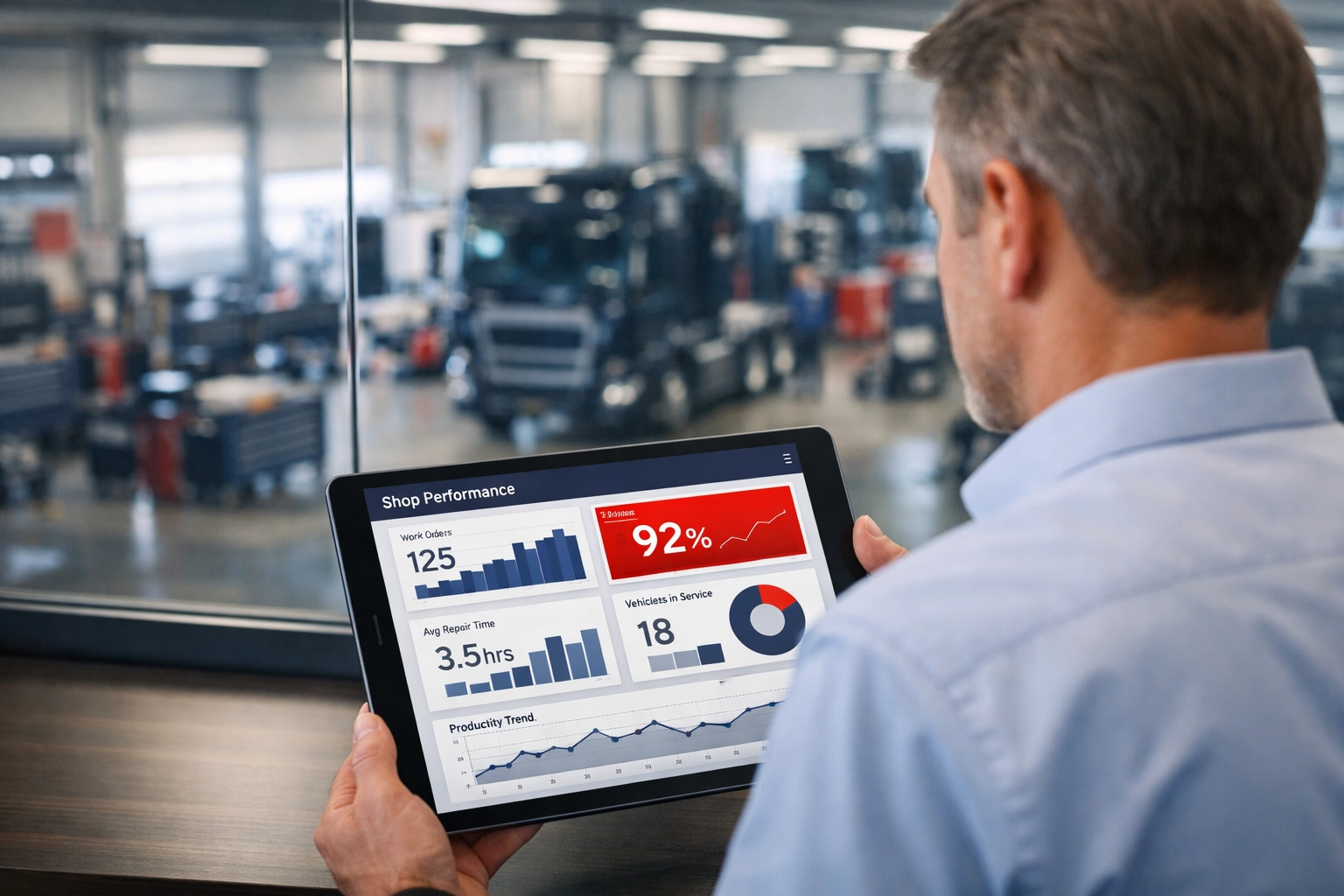
Nothing kills a shop’s momentum like a comeback. It’s a double hit to your profitability: you lose the bay space for a new, revenue-generating job, and you pay for the labor and parts to fix a mistake you’ve already been paid for once.
How much are comebacks costing you? Most owners only look at the direct cost of the parts, but the "opportunity cost" is often three times higher. When a truck returns for a failed repair, it disrupts the entire schedule, causes fleet downtime, and damages your reputation.
A healthy shop tracks the "Why" behind every comeback. Is it a parts failure? A training issue with a specific tech? Or a communication breakdown? If you aren't tracking re-work as a specific line item, you’re ignoring one of the most significant profit drains in the industry.
In a busy shop, "small" things often fall through the cracks. A technician uses a can of brake cleaner, a few shop rags, and some hardware, but none of it makes it onto the final invoice. Or perhaps a tech performs a quick diagnostic check that took 15 minutes, but the service writer forgets to add it to the Repair Order (RO).
Are you billing every minute and every nut and bolt? This is one of the 8 ways to reduce your fleet operating costs by simply capturing the value you are already providing. When you rely on paper ROs or disconnected systems, these small charges are the first things to disappear.
To audit this, pull five random closed ROs from last week. Compare the technician’s notes to the final bill. If you find even $20 of unbilled parts or 0.2 hours of unbilled labor per RO, multiply that by your monthly volume. The number will likely shock you. Using tools to split ROs or move labor ensures that every action taken in the bay is accounted for and billed correctly.
Warranty management is often a nightmare of paperwork and strict deadlines. Because it’s difficult, many shops simply don’t do it well. They replace a failed part that was under warranty, toss the old one in a bin, and forget to file the claim.
Is your warranty process leaving money behind? Every time you fail to claim a part or labor reimbursement from a manufacturer, you are handing them your profit. A centralized system should automatically flag parts that are under warranty and prompt the user to initiate a claim.
If your "Warranty Pending" folder is a stack of papers on someone's desk, you are losing money. You need a digital trail that tracks a part from the moment it’s installed to the moment it’s returned for credit.
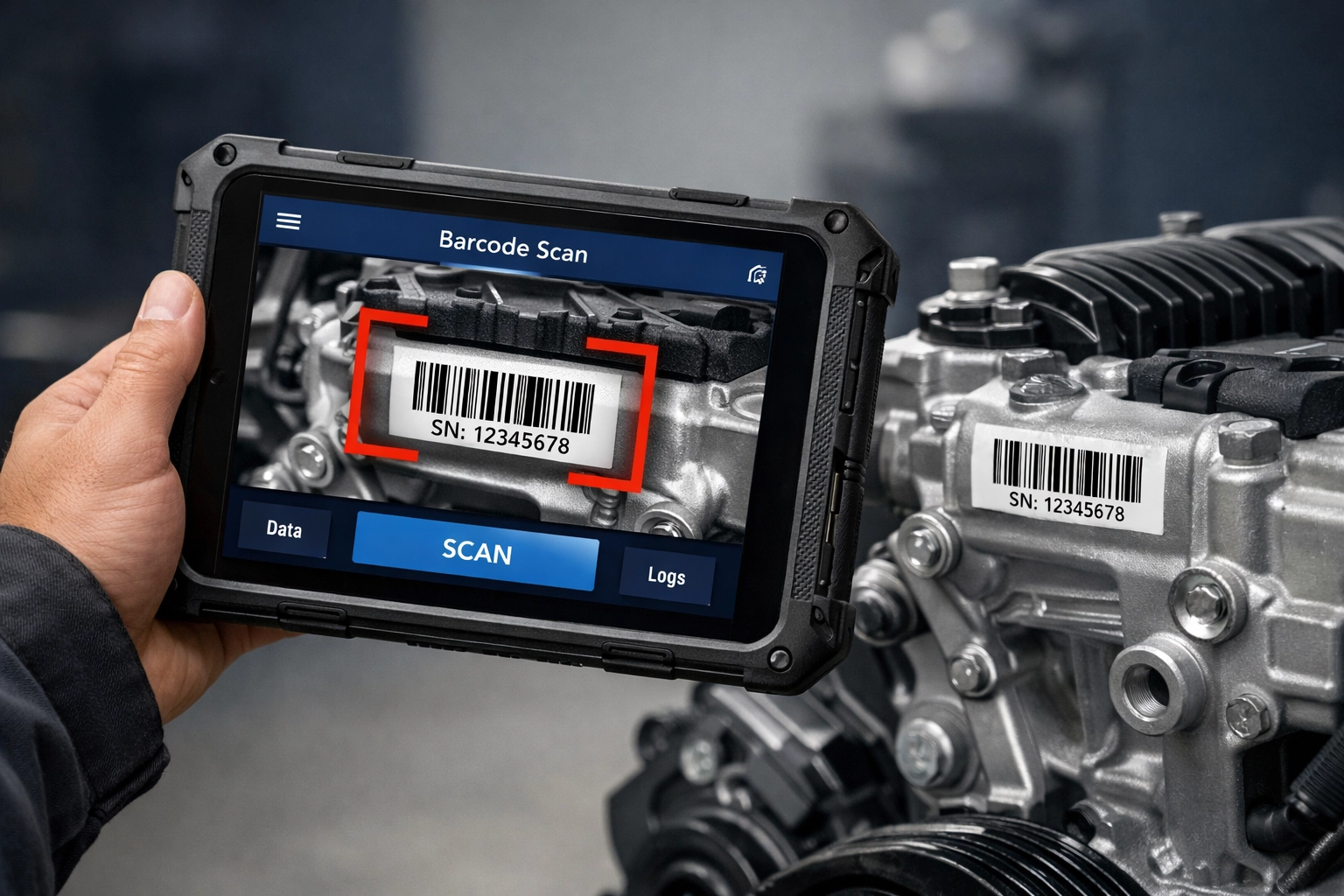
Inventory is just cash that you can't spend. While you need parts on hand to ensure quick turnaround times, excess inventory is a silent profit killer.
How much cash is sitting in your inventory? Many shops suffer from "just in case" ordering. They have parts gathering dust that haven't been touched in two years. Conversely, they lack the high-velocity parts they need, leading to emergency orders and high shipping costs.
Audit your inventory turnover rate. If you have parts that haven't moved in six months, that capital is dead. A modern shop needs an automated inventory system that sets "min/max" levels and alerts you when stock is low, ensuring you only spend money on what you actually sell.
The heavy-duty repair industry is heavily regulated. Whether it's DOT requirements or internal safety audits, your documentation must be flawless.
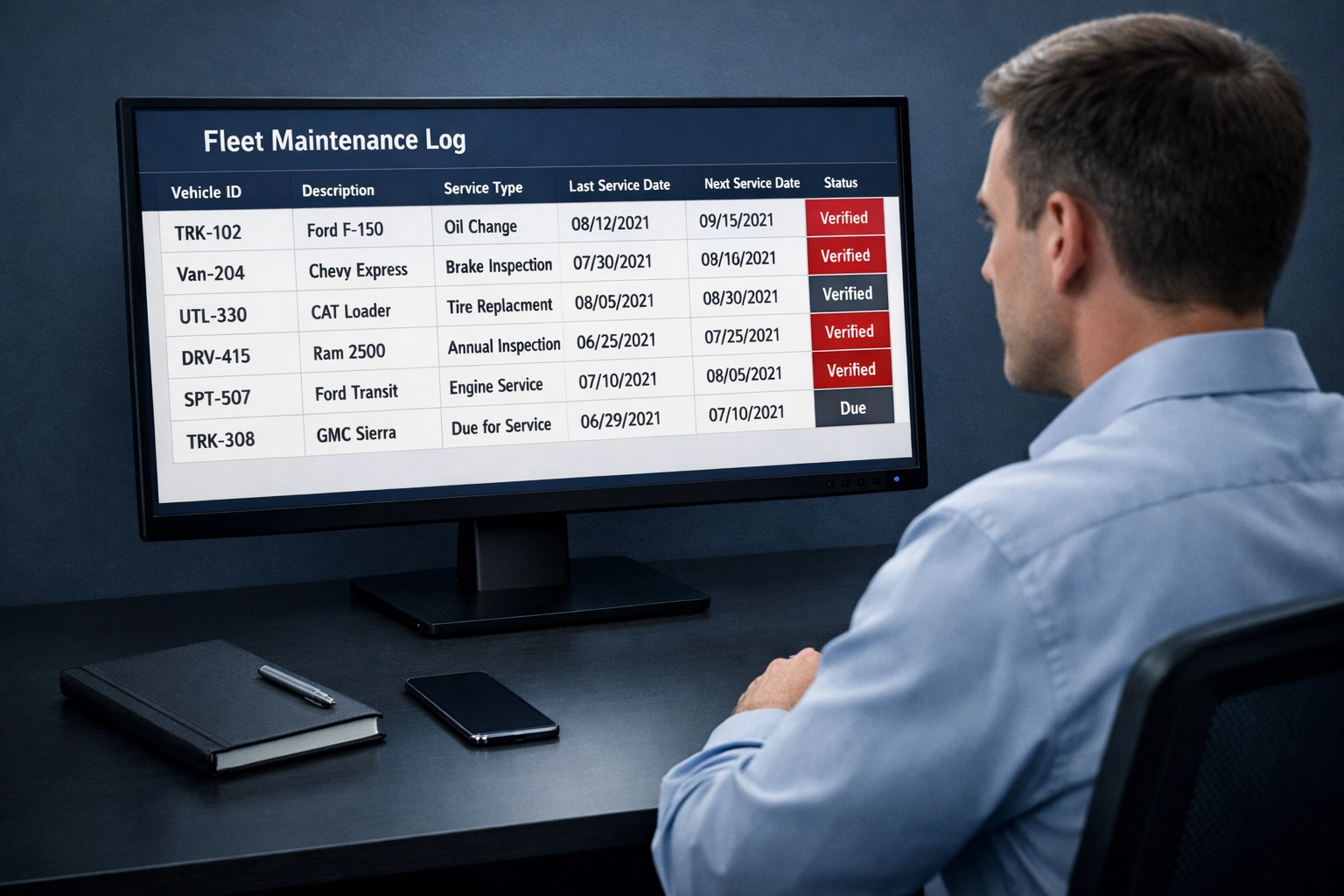
Are you one audit away from a total shutdown? If an auditor walked into your shop today and asked for the full maintenance history of a specific vehicle from three months ago, how long would it take you to find it? If the answer involves digging through filing cabinets, you are at risk.
The cost of a failed audit isn't just a fine; it's the administrative nightmare and the potential loss of major fleet contracts. Moving to a digital, centralized system ensures that every repair, every inspection, and every signature is stored and searchable in seconds. This isn't just about efficiency; it's about business survival.
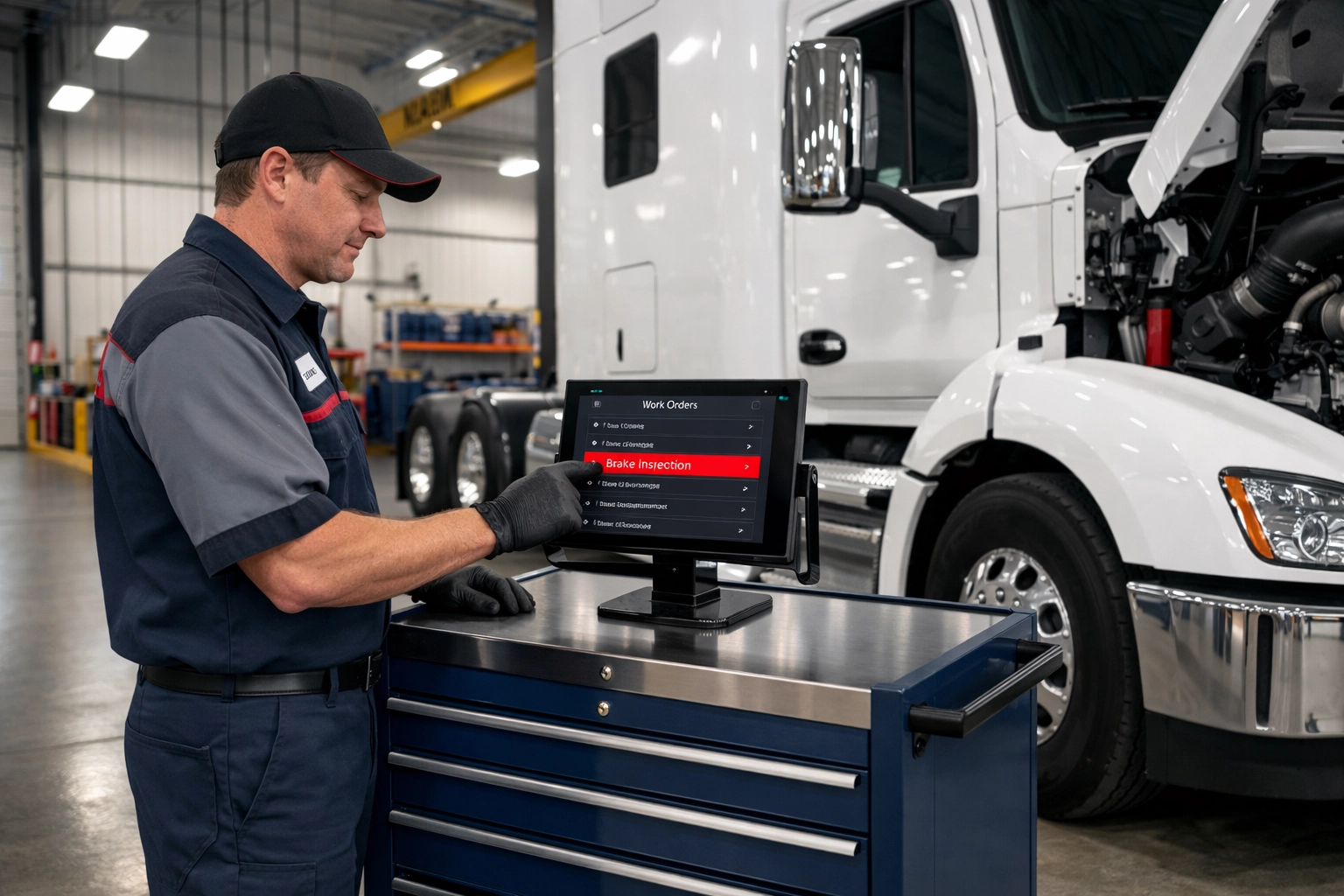
Technicians are hired to fix trucks, not to be data entry clerks. However, in many shops, techs spend a significant portion of their day filling out forms, walking to the parts room, or trying to decipher a service writer’s handwriting.
Are your techs repairing or paperworking? Every minute a technician spends with a pen in their hand is a minute they aren't turning a wrench. This friction reduces your shop’s total capacity.
To audit this, observe your floor for one hour. Count how many times a tech leaves their bay for something other than a tool. If they are constantly hunting for information or parts, your workflow is broken. Streamlining this through a digital interface: where they can see their assignments and log parts from a tablet: can increase your shop's capacity by 10-15% without hiring a single new person.
Conducting this audit is the first step, but fixing these leaks requires the right tools. BrightOrder’s emdecs one is designed specifically to eliminate the friction that drains shop profits. We provide a one-stop-shop solution for heavy-duty vehicle maintenance that integrates every aspect of your operation.
The leaks in your shop might be small, but they are constant. Over a year, they can account for tens of thousands of dollars in lost revenue. It’s time to stop the drip.
A profitable shop is an organized shop. By addressing these seven points, you transition from a reactive business owner to a proactive leader. You stop wondering where the money went and start seeing the results of your team’s hard work.
If you’re ready to see how a centralized system can plug these leaks and transform your operations, let’s talk. Your profit is waiting to be recovered.
How long does it take to see results after implementing a management system?
Most shops see an immediate improvement in labor capture and billing accuracy within the first 30 days. Full inventory optimization typically takes 60-90 days as the system learns your usage patterns.
Is this audit suitable for shops with only 2 or 3 technicians?
Absolutely. In fact, small shops often feel the impact of profit leaks even more acutely because they have less room for error. Efficiency is the key to scaling a small team.
Do I need to replace my existing accounting software?
Not necessarily. Many specialized fleet systems are designed to integrate with or export data to standard accounting packages, ensuring your financial reporting remains seamless.
Talk to our team about what is going on in your operation.
We will point you to what is relevant.